





A gas furnace and sheet-metal air handler unit installed in an unfinished concrete basement.

Furnace Repair in Hilton Head Island, SC

Tell us about the job

Takes about a minute. No obligation.

RepairFurnace or heatingBeaufort County, SC
Step 1 of 2

What ZIP code is the job in?

A furnace repair is worth it when the cabinet and ductwork are sound and the problem is one part failing on its own, like an igniter, a flame sensor, or a blower motor. Those are normal wear items and replacing one doesn't say anything bad about the rest of the system. What changes the math is a cracked heat exchanger, since that's the part that keeps combustion gases out of the air you breathe, and it isn't something to patch. Age matters too, not because an old furnace is doomed, but because a system near the end of its life tends to fail again somewhere else soon after the first repair. If a technician tells you the exchanger is cracked, or that the same furnace keeps breaking down season after season, that's the point to ask about replacement instead of another repair.

5 months
November through March, your furnace is on duty
42°F
the average winter night it heats against
1 winter storms
in ten years, the nights a failure hurts most
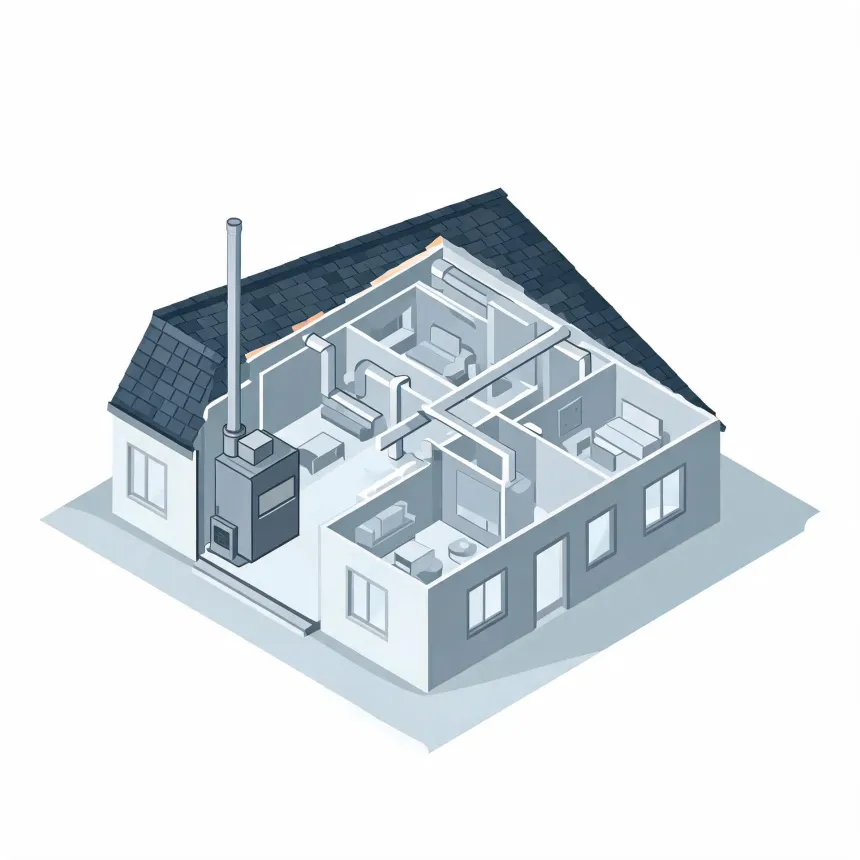
Isometric cutaway illustration of a single-story house showing interior rooms, ductwork, and a dark furnace unit with a tall flue pipe rising past the shingled roof.
Your furnace works hardest from December through February.

NOAA nClimDiv, 1991–2020 normals

Furnaces here only run about five months a year, November through March.

A furnace that gets most of the year off doesn't wear out fast, so one broken part usually just means one part.

November is when a weak part gives out

Heat runs November through March
Winter nights average 42°F
Climate zone 2A

Half the homes in Beaufort County were built in 1999 or later. If yours is one of them, the furnace handling your repair call probably isn't old enough to be failing on its own terms. A newer system hasn't had many winters of work, and one broken part doesn't mean the rest is close behind. That's worth knowing before anyone starts talking about replacement. The fix in front of you is likely just a fix.

A normal furnace problem gets a normal furnace fix

Electricity here runs $41.71 per million Btu, in line with the rest of South Carolina. Nothing about Hilton Head Island makes a furnace work harder or fail differently than it would anywhere else. If a part gave out, it's probably just that part.

Find a contractor
A man in a dark shirt and brown work pants, seen from behind, carries a worn canvas tool bag up porch steps toward a dark front door, with a potted shrub to the right.
A gray high-efficiency gas furnace installed in an unfinished basement, surrounded by gas lines, a condensate drain, and sheet-metal ductwork.

A young furnace still has its working life ahead

A furnace installed with a newer house hasn't logged many years of work yet. The time-lapse above shows one day, but stack that across winters and a young system still has most of its working life ahead of it. That's the furnace most repair calls here are about. Ask the technician for the install date if you don't already have it. Knowing the system is young is reason enough to fix the part in front of you and leave it at that.

Check the thermostat and the power first

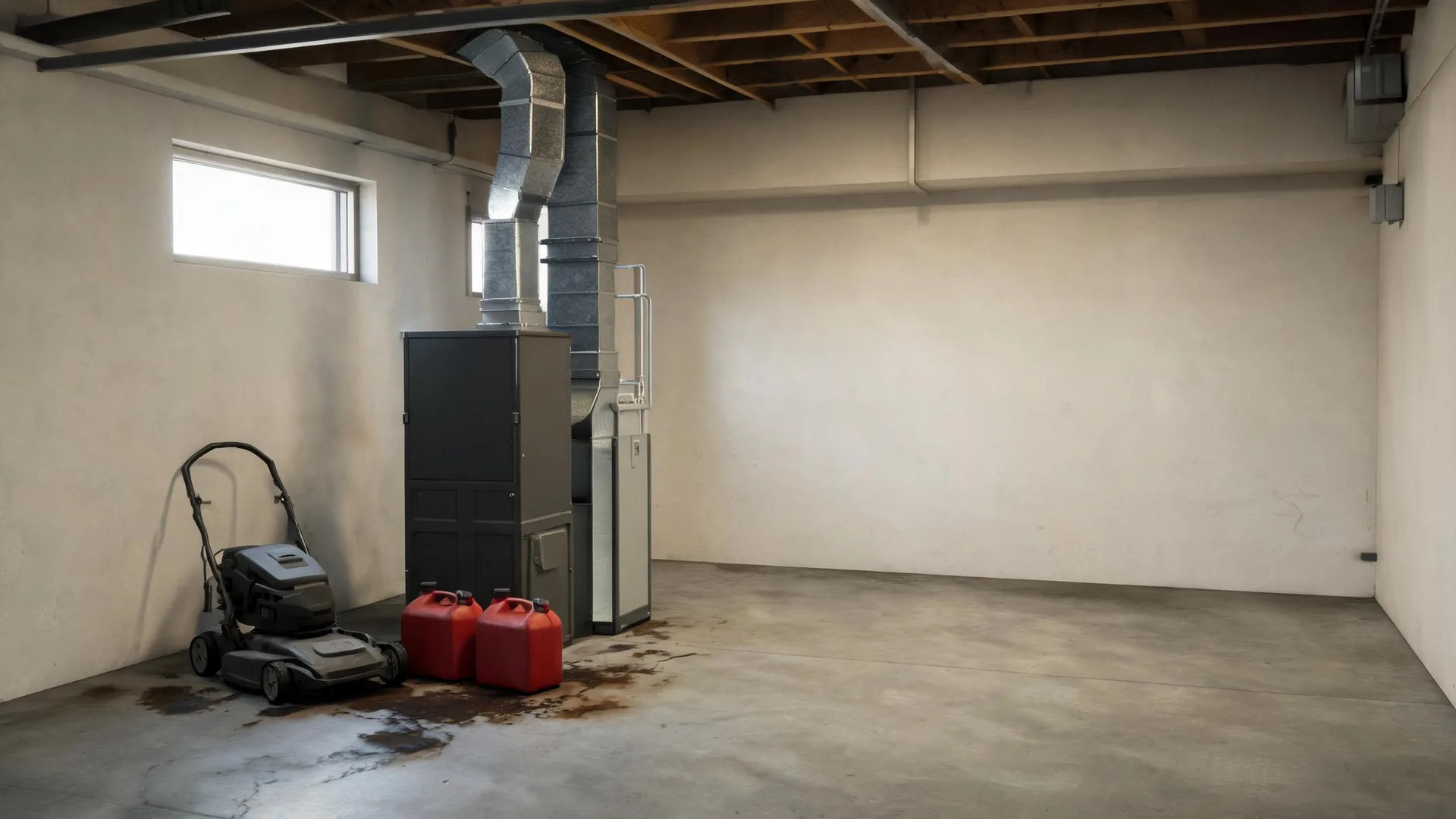
Make sure the thermostat is set to heat and set above room temperature, not just on. Check the furnace switch, the one that looks like a light switch near the unit, and look at the breaker panel for anything tripped. If the furnace has a standing pilot, confirm the pilot is actually lit. These take a minute and rule out the problem before anyone opens the cabinet.
Past that, it's a job for a technician

Don't open the burner compartment or touch the gas valve. If the furnace is cycling on and off fast, blowing cold air, or not starting at all, note what it's doing and when it started. That's what the technician will ask first. A furnace that smells like gas or keeps tripping its breaker needs the switch shut off and a call, not more checking.

A furnace that's struggling doesn't fail cleanly. A cracked heat exchanger gets worse under heat, since the metal expands as it runs and the crack can open wider each cycle. A dirty flame sensor will let the furnace keep trying to light and shut off, over and over, which is harder on the igniter than one clean shutdown would be. A failing blower motor that keeps running can overheat and take the control board with it when it finally quits. None of that is a reason to panic over a normal repair call. It's a reason to shut the furnace off and get someone out instead of letting it keep cycling while you wait.

A diagnostic call starts with a question, not a screwdriver. The technician asks what the furnace was doing before it quit, because a furnace that won't start at all points somewhere different than one that starts and then shuts off. Power and gas get checked at the unit itself, not just the thermostat setting. Then the panel comes off and the technician watches the furnace try to fire. The igniter has to glow hot enough. The gas valve has to open. The flame sensor has to confirm a flame is actually there and keep confirming it, or the furnace shuts back down on purpose. If all of that holds, the blower has to kick on and push the heat out through the ducts. Whichever step fails is where the problem lives. Once the technician sees which one it is, they can tell you what part is bad and what it takes to fix it.