A illuminated white antebellum-style house with a wraparound porch, white columns, and Spanish-moss-draped oak trees, photographed at dusk.

Furnace Repair in Gaffney, SC

Tell us about the job

Takes about a minute. No obligation.

RepairFurnace or heatingCherokee County, SC
Step 1 of 2

What ZIP code is the job in?

Check the simple things first

Make sure the thermostat is set to heat and the temperature is above room temperature. Check that the furnace switch, the one that looks like a light switch near the unit, is flipped on. Look at the breaker panel for a tripped breaker. If you have a gas furnace, check that the gas valve is open and other gas appliances in the house are working.


Know what to tell the contractor

Before anyone comes out, notice what the furnace is doing. Does it try to start and shut off, or not respond at all. Is there a smell, a burning smell or a rotten egg smell. Do you hear clicking, banging or a humming that doesn't lead to the burners lighting. Telling the contractor what you saw and heard helps them figure out the problem faster once they're on site.

7 months
October through April, your furnace is on duty
32°F
the average winter night it heats against
6 winter storms
in ten years, the nights a failure hurts most
Isometric cutaway illustration of a single-story house with a dark shingled roof, showing interior rooms with beds and furniture, overhead ductwork, and a gray furnace with a tall flue pipe at the exterior wall.
Your furnace works hardest from November through March.

NOAA nClimDiv, 1991–2020 normals

Cherokee County is an even split between homes built before 1984 and after.

A furnace acting up here is almost always a worn part or a wiring issue, not something the house itself is doing to it.

A furnace that runs October through April and struggles costs you every one of those months

Heat runs October through April
Winter nights average 32°F
Climate zone 3A
Seven months of work, not a year-round grindFurnace here runs October through April, overnight lows averaging 32°F in December, January and February.

Furnace season starts in October here, which makes September the month to get a furnace looked at before it's working hard. A part that was already weak, a cracked heat exchanger, a failing igniter, a blower motor on its way out, tends to show itself in those first cold weeks when the furnace runs long and often for the first time since spring. Once it's running through the full stretch from October to April, a small problem gets more chances to turn into a no-heat call. Catching it in September means you're fixing it on your schedule, not during the first hard freeze.

Get the usual fix

Nothing about this area is especially hard on it. It's most likely the usual problem with the usual fix.

Find a contractor
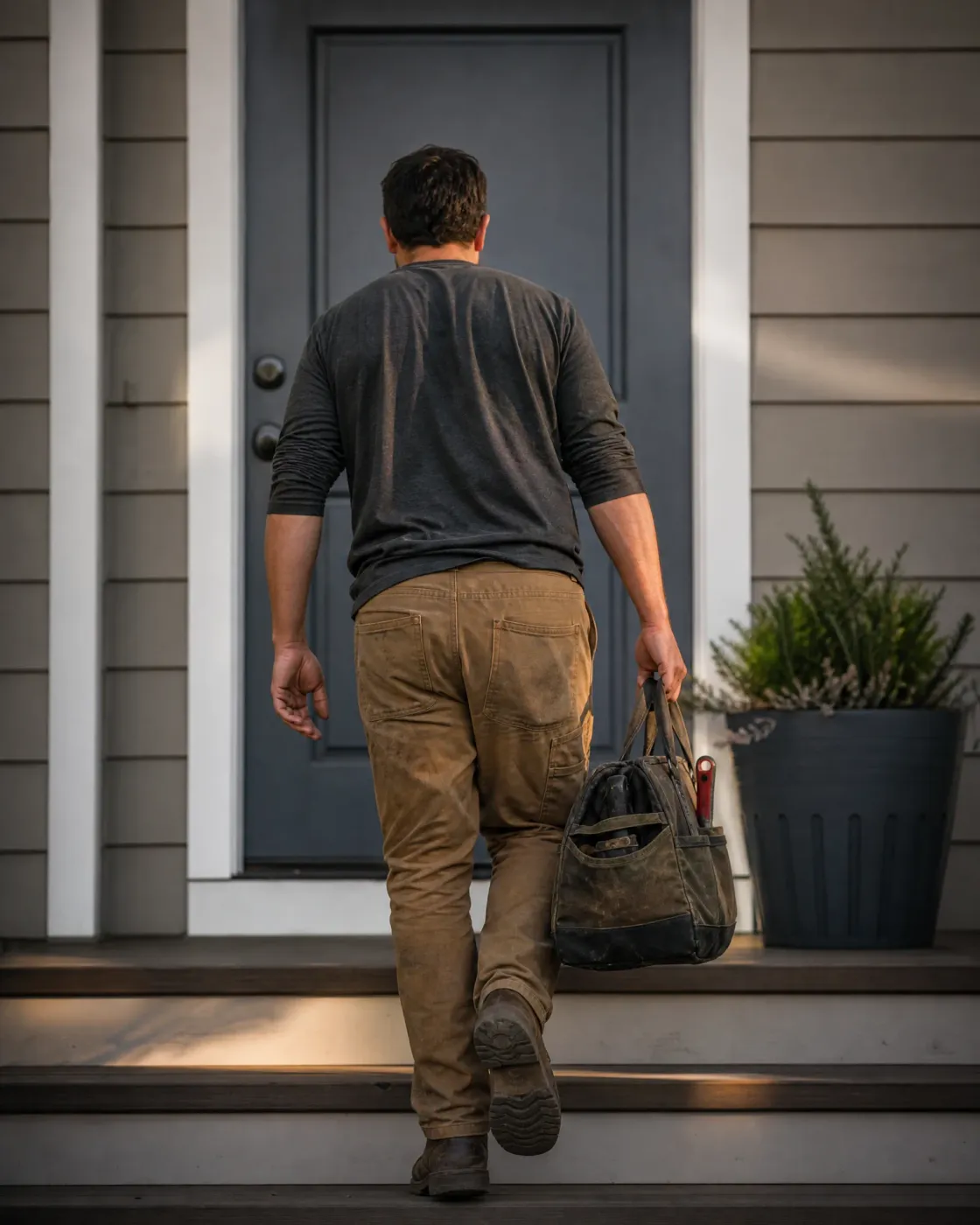
A man in a dark long-sleeve shirt and tan work pants, seen from behind, carries a canvas tool bag up porch steps toward a dark blue front door, with a potted plant beside him.
A gas furnace with attached ductwork, gas piping, and condensate lines installed in a concrete-block basement.

Seven months is a job a furnace can usually handle

A furnace that's kept up through those seven months is a good candidate for repair rather than replacement. If yours is acting up now, the odds favor a fix. Worn parts get worth replacing on their own terms, not because the furnace has been run into the ground.

A few parts cause most no-heat calls

An igniter that's cracked or weak won't light the burners. A flame sensor coated with residue tells the furnace no flame is present even when there is, so it shuts down and tries again. A blower motor with worn bearings runs loud or stops moving air through the ducts. A pressure switch that's stuck or miswired keeps the whole cycle from starting. Each of these fails on its own, not because the others are wearing out too.

The symptom tells you more than the age does

A furnace that short cycles, locks out, or won't fire isn't necessarily near the end. Most of these parts can be replaced on their own, and a furnace that's otherwise sound runs fine afterward. What matters more is whether the part just wore out or whether something behind it, like heat exchanger damage or a pattern of repeated lockouts, is causing the failure. A contractor can tell which one it is from what the furnace is doing and a look inside the cabinet.

Most furnace trouble shows up as a pattern, not a single event. Short cycling is one of the clearest. The burners light, the furnace runs for a little while, then shuts off and tries again. That usually means a flame sensor isn't reading the flame right or a pressure switch isn't holding steady. A furnace that runs but never gets the house warm often has a blower problem. Air isn't moving through the ducts the way it should even though the burners are fine. Weak heat is different from no heat, and it points to a different part. A burning smell right at the start of a cold snap is normal, that's just dust burning off the heat exchanger. A burning smell that lingers or comes back every cycle is not. Banging or a loud thump at startup usually means gas is building up before it lights, and that's worth having looked at soon rather than waiting.

A diagnostic visit starts before the panel comes off. A tech asks what the furnace was doing, then watches it do it, because a furnace that short cycles behaves differently from one that won't start at all. From there it's a sequence of checks, not a guess. Power and gas supply first, then the switches that have to click in order, flame sensor, pressure switch, limit switch, before the burners ever get the signal to fire. Each one either passes or it doesn't, and that's what points to the failed part. Once it's found, the tech can usually tell you right there whether it's a straightforward swap or something that needs a longer look inside the cabinet.