






Night view of illuminated white Southern-style houses with wraparound porches beneath Spanish moss-draped oak trees.

Furnace Repair in Dillon, SC

Tell us about the job

Takes about a minute. No obligation.

RepairFurnace or heatingDillon County, SC
Step 1 of 2

What ZIP code is the job in?

A tech starts by asking what the furnace is doing, or not doing, before touching anything. Short cycling, no heat, a burner smell, a noise that wasn't there before, all of it points somewhere different. From there it's a look at the flame itself, the color and shape of it, whether the igniter is glowing and lighting the burners on the first try. Then the gas pressure, the flue, the condensate line if the furnace has one, checking that nothing is blocked or draining where it shouldn't. A lot of furnace trouble traces back to airflow, so the filter and the blower get checked too, since a starved system will trip its limit switch and shut itself down to protect the heat exchanger. By the time the panel goes back on, the tech should be able to say exactly what failed and why, not just that the furnace is working again for now.

5 months
November through March, your furnace is on duty
35°F
the average winter night it heats against
2 winter storms
in ten years, the nights a failure hurts most
Isometric cutaway illustration of a small house showing a furnace unit connected to ductwork running through the interior and attic, with a chimney on the shingled roof and simple furniture in the rooms.
Your furnace works hardest from November through March.

NOAA nClimDiv, 1991–2020 normals

Furnaces in Dillon County sit idle through October.

The first cold snap in November is when a weak igniter or a bad limit switch finally gets found out.

Half these homes were built in 1984 or earlier. That's not why a furnace fails.

Half the homes here were built by 1984
Heat runs November through March
Winter nights average 35°F

Nothing about a furnace in Dillon makes it fail differently than one anywhere else. It's usually a dirty flame sensor, a failed igniter, or a limit switch doing exactly what it was built to do. Electricity in South Carolina ran $41.71 per million Btu in 2024, so a furnace working harder than it should to make heat shows up on the bill before anything else gives it away. A tech who knows these failures will spot them here the same way they would anywhere. The fix is ordinary. The county doesn't change that.

Five months of work a year is not much to ask of a furnace

Heat only runs November through March here, and overnight lows average 35°F even in the coldest stretch. A furnace built for real cold spends most of the year resting. That kind of life usually leaves a furnace in decent shape underneath whatever is going wrong now, which is why a repair is worth looking into before anything bigger.

Find a contractor
A man in a cap, dark shirt and tan work pants walks up porch steps toward a dark blue paneled front door, carrying a canvas tool bag, with a potted shrub beside the entry.
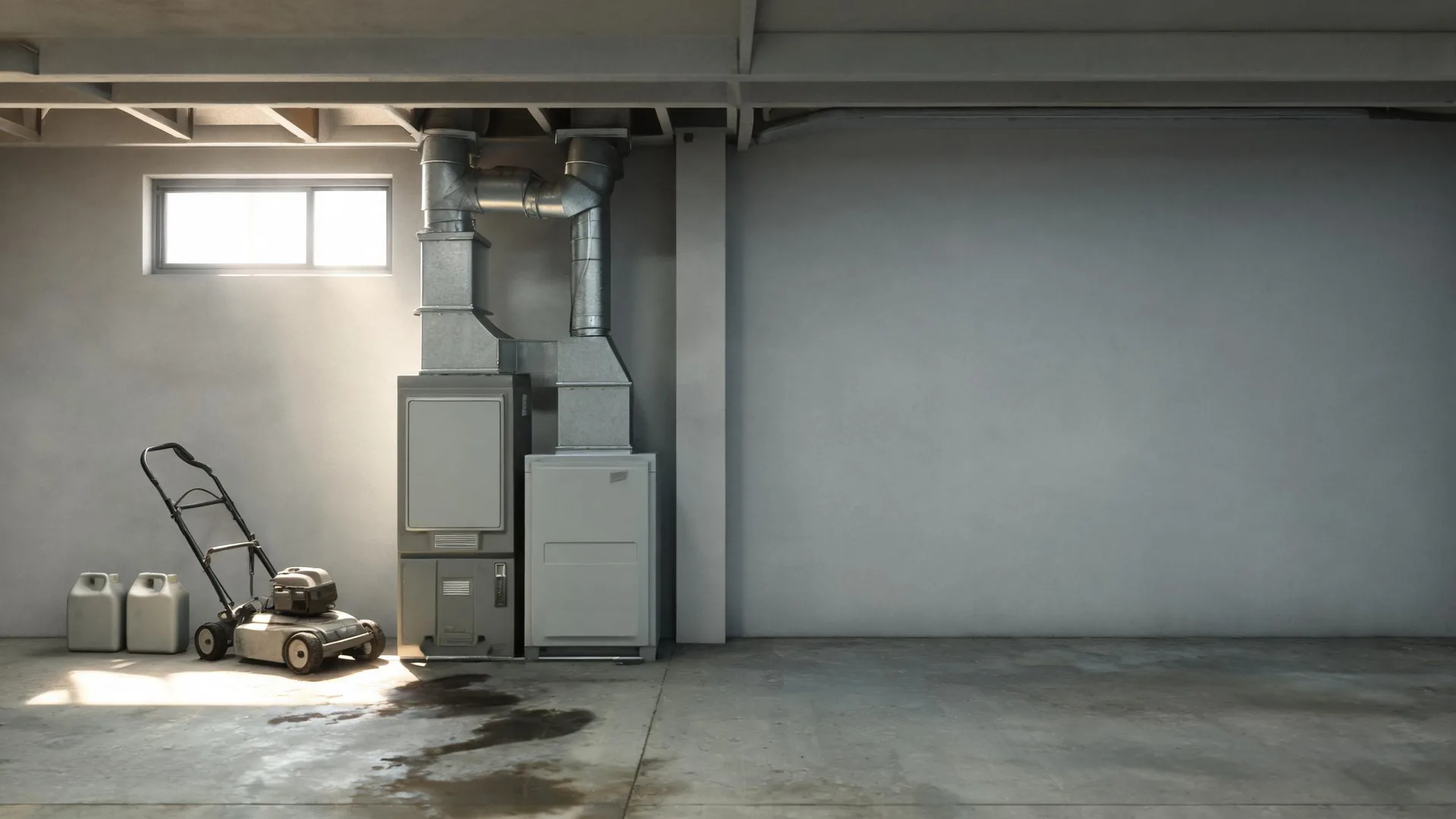
A gas furnace with attached ductwork, gas piping, and condensate lines installed in a concrete-block basement.

Mostly idle, then called on

This time-lapse runs through a stretch where the furnace works about five months a year and sits unused the rest of the time. That kind of schedule doesn't wear a furnace down. So if something's wrong with yours now, a repair is usually the right move before considering anything bigger.

The flame sensor wears out faster than anything else

The flame sensor sits right in the burner flame every cycle, and over time a film builds up on it until it can't sense the flame anymore. The furnace lights, runs a few seconds, then shuts off and tries again. Most of the time cleaning the sensor fixes it. If it keeps happening after a cleaning, the sensor itself is likely worn out.
A limit switch tripping is a symptom, not the problem

The limit switch shuts the furnace down when it senses too much heat building up in the cabinet, and it's doing its job when that happens. The real cause is almost always something blocking airflow, a clogged filter, a blower that's failing, or ductwork that's closed off somewhere. Replacing the switch without finding what tripped it just means it trips again.

A furnace that's cycling wrong or smelling off and gets left alone usually doesn't fix itself by running more. A flame sensor caked with residue will keep misreading the flame until the furnace gives up lighting at all, not just stutter through startup. A cracked heat exchanger stays small right up until the metal fatigues enough to open further, and that's a safety problem, not just a repair one. Soot building up on a burner changes the flame itself, and a flame burning wrong puts more carbon monoxide into the exchanger than it was built to handle. Even a clogged filter, left long enough, makes the blower work harder until the motor itself takes the damage. None of this means panic over every odd noise, but a furnace telling you something is wrong is worth listening to before it tells you louder.

Age by itself doesn't tell you much. A furnace that's old but has been maintained, with clean burners and a sensor that gets serviced, can be a better bet than a newer one that's been ignored. What matters more is what's actually failing. A dirty sensor, a bad igniter, a worn capacitor, these are normal wear items and replacing them is routine. A cracked heat exchanger is a different conversation, since that's the part that can't be patched and shouldn't be. If a furnace needs the same repair every season, or if one component failing has taken others down with it, that pattern matters more than the furnace's age. A tech who opens the cabinet can usually tell you which situation you're in before you decide anything.