Two single-story houses, one brick and one with light siding, both with covered front porches, set behind a mowed lawn and a tall green hedge under large moss-draped oak trees.

Furnace Repair in Cheraw, SC

Tell us about the job

Takes about a minute. No obligation.

RepairFurnace or heatingChesterfield County, SC
Step 1 of 2

What ZIP code is the job in?

Short cycles or won't stop running

A furnace that fires up and shuts off again within a few minutes is usually fighting a dirty flame sensor, a clogged filter, or a cracked heat exchanger tripping a safety switch. One that runs nonstop without the house warming up often points to a thermostat problem or a blower that can't push enough air. Either way the furnace is telling you it can't finish its job.

A furnace acting up rarely waits for a good time

A banging noise, a burning smell, or air that's gone lukewarm usually means a furnace is partway to a full breakdown already. A limit switch that keeps tripping or any smell of gas is a safety issue, not something to watch for a few days. These problems tend to get worse exactly when the furnace is working hardest, so the coldest night is the one most likely to finish it off.

5 months
November through March, your furnace is on duty
34°F
the average winter night it heats against
8 winter storms
in ten years, the nights a failure hurts most
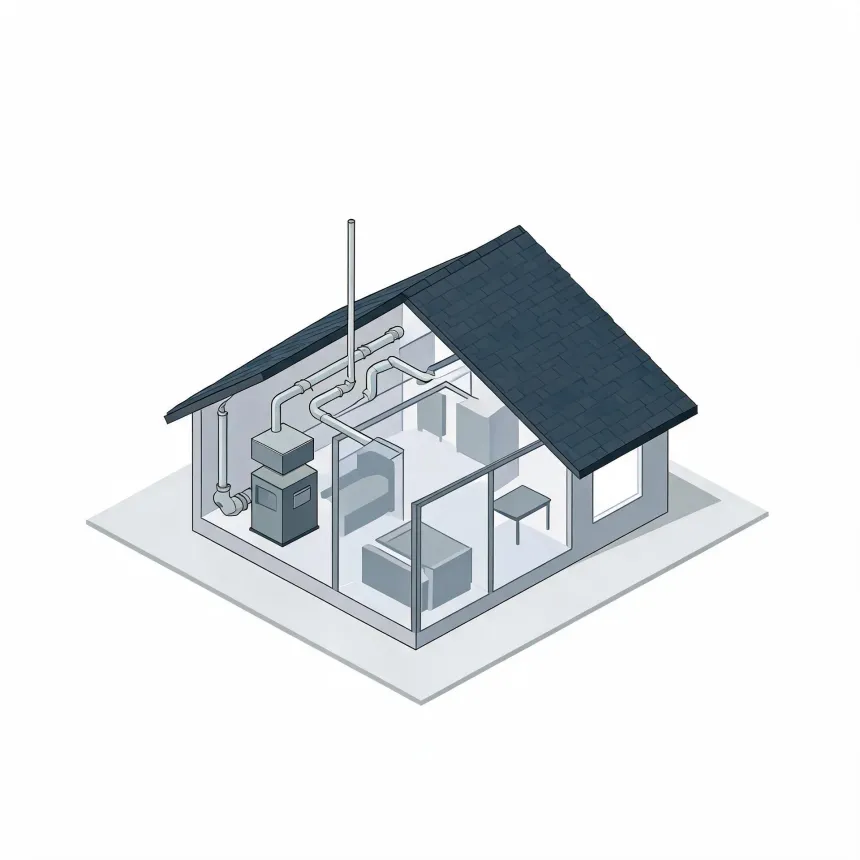
Isometric cutaway illustration of a small house with a dark shingled roof, showing an interior furnace unit, ductwork, and a flue pipe extending through the roof.
Your furnace works hardest from November through March.

NOAA nClimDiv, 1991–2020 normals

Furnace problems in Cheraw are the same ones a furnace has anywhere.

A dirty flame sensor or a failed igniter calls for the usual fix, not a special one.

Furnace repair calls here cluster in November, when the first cold snap finds the part that was already failing

Heat runs November through March
Winter nights average 34°F
8 winter storms from 2015 to 2024
A furnace here fails like a furnace anywhereHalf the homes in Chesterfield County were built in 1986 or earlier, and over a third are mobile homes.

Furnace here only has to work about five months a year, November through March. That's a short season compared to a lot of the country. Overnight lows average 34°F through December, January and February, which is cold enough to run the furnace steadily but not the kind of extreme that wears out a blower motor or a heat exchanger early. So a furnace here has usually had an easier life than its age suggests. That changes what a repair call means. More often than not, what's wrong is a single failed part, not a system that's used itself up, and fixing that part is usually the right call.

If a storm has come through, check the furnace before you need it

Chesterfield County has seen 174 severe weather events over the last ten years, hail and damaging wind among them. Hail can dent an outdoor furnace vent or intake, and wind drives debris into it, sometimes without stopping it from running. If a storm has come through since it last ran right, have it looked at now, before the first cold night finds the problem.

Find a contractor
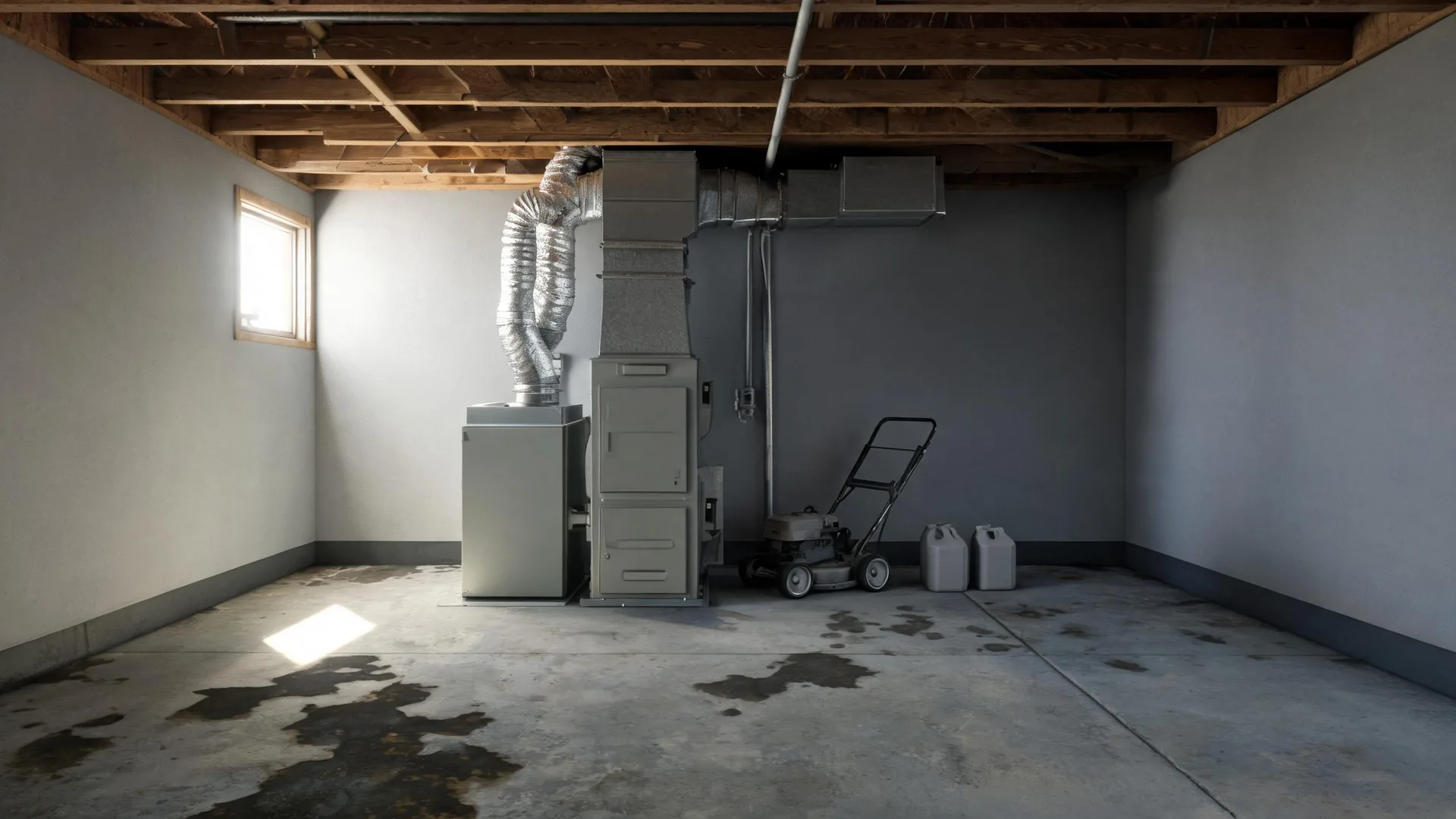
A gray residential gas furnace installed in an unfinished basement, connected to sheet-metal ductwork and PVC pipes.

What to check before you call anyone

Before anyone comes out, there's a few things worth checking yourself. Start with the thermostat. Make sure it's set to heat, not cool, and the temperature you want is actually above room temperature. A dead thermostat battery looks exactly like a furnace that won't respond to anything. Next, check the filter. Pull it out and hold it up to a light. If you can't see light through it, that's likely choking the airflow and could be behind a furnace that short cycles or blows cool air. Check the breaker panel and any switch that looks like a light switch near the furnace itself, since that shuts power to the unit and sometimes gets bumped off by accident. If the furnace is gas, look for a switch on the gas line near the unit and make sure it's turned to open, not closed. Last, look at the vent and intake pipes outside. If you see anything blocking them, leaves, snow, a bird's nest, clearing it might be all that's needed. What you shouldn't do is take the furnace apart or go near the flame sensor or igniter yourself. Those call for the right tool and the power shut off first.

Most failures are a handful of parts

A flame sensor coated in residue stops reading the flame and shuts the burner down. An igniter weakens with age until it can't get hot enough to light the gas. A pressure switch sticks from dust or a blocked vent and won't let the furnace start at all. These wear out from normal use and get swapped out on their own, not as a sign of anything bigger.

Some failures mean something gave out underneath

A cracked heat exchanger, a seized blower motor, or a control board that's failed outright usually means a part has reached the end of its working life rather than hit a snag. The symptoms can look the same as a minor fix at first, a furnace that won't start or won't stay running either way, which is why it's worth having someone look before assuming which one it is.

A furnace with a problem doesn't fix itself by staying on. A flame sensor coated in residue keeps letting the burner light and shut off, and every cycle adds a little more residue instead of less. A crack in a heat exchanger doesn't seal itself up. It spreads a little more with each heating cycle as the metal expands and contracts. A blower straining to push air through a dirty filter runs hotter than it should, and that heat wears down its bearings early. A pressure switch stuck from dust gets no cleaner by cycling the furnace again and again. Left alone, most of these end the same way. A part that might have been cleaned or adjusted now has to be replaced outright.

The decision usually comes down to what actually failed, not how old the furnace is. A flame sensor, an igniter, a pressure switch, these get replaced on their own and the furnace is fine afterward. A cracked heat exchanger is a different conversation. Once that cracks it doesn't get welded back, the whole unit gets replaced, because a cracked exchanger can let combustion gas mix into the air the blower pushes through the house. A blower motor that's seized is somewhere in between, sometimes worth replacing on its own, sometimes a sign the rest of the furnace is at the same point in its life. The part that failed tells you most of what you need to know before anyone talks about the whole system.