




Two illuminated white Southern-style houses with wraparound porches and staircases, framed by a Spanish moss-draped tree on a quiet street at night.

Furnace Repair in Camden, SC

Tell us about the job

Takes about a minute. No obligation.

RepairFurnace or heatingKershaw County, SC
Step 1 of 2

What ZIP code is the job in?

A furnace repair isn't always a simple yes or no. Age matters, but so does which part failed. A cracked heat exchanger means the furnace is done, no question, since that's a safety issue and not something anyone patches. A bad igniter or a failed blower motor is a different story. Those are normal wear parts, and replacing one doesn't say anything bad about the rest of the system. The questions worth asking are how often it's been breaking down and whether the repairs keep hitting different parts of the furnace or the same one. A furnace that needs a new part every year is telling you something. One that's run fine for a long time and just had its first real failure probably still has life left in it.

5 months
November through March, your furnace is on duty
34°F
the average winter night it heats against
3 winter storms
in ten years, the nights a failure hurts most
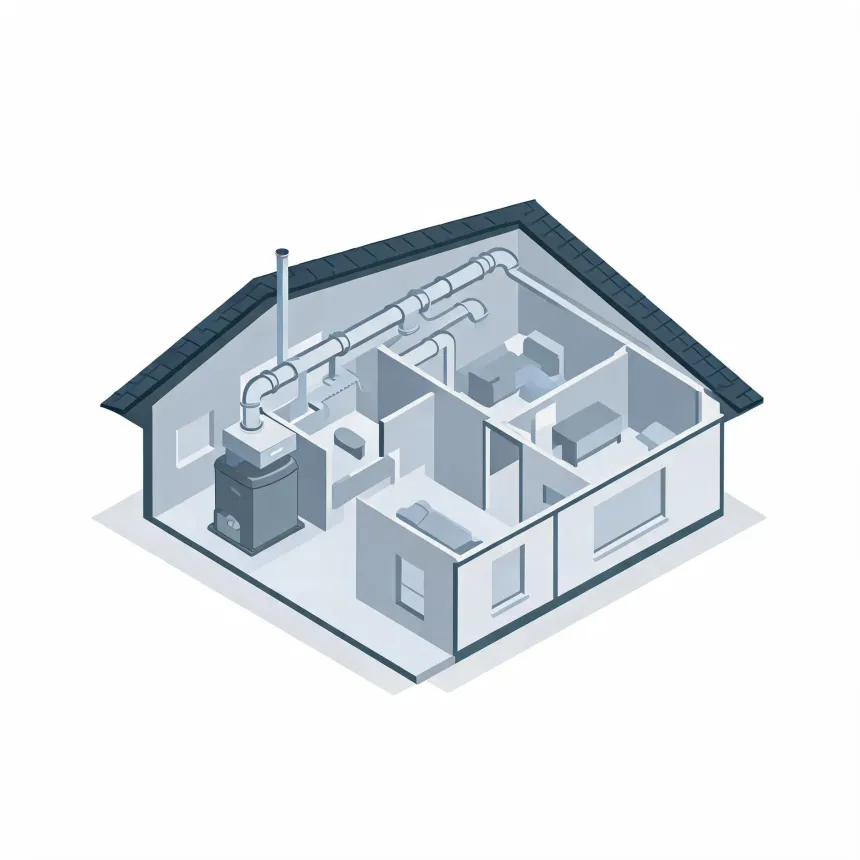
Isometric cutaway illustration of a single-story house showing interior rooms, ductwork running along the ceiling, a flue pipe through the roof, and a dark furnace unit in one corner.
Your furnace works hardest from November through March.

NOAA nClimDiv, 1991–2020 normals

A furnace that short cycles is shutting off before the air even gets warm.

Short cycling like that usually points to a flame sensor or a clogged filter, not a furnace that needs replacing.

Five months of mild cold is not much to ask of a furnace

Heat runs November through March
Winter nights average 34°F
Climate zone 3A

Heat goes on here in November, and the first cold snap is when a weak part finally gets tested. A furnace that sat quiet since spring doesn't ease into the work. It goes from off to running several times a day, and whatever was marginal before is what fails now. That's why the first few weeks of the season see more no-heat calls than the rest of the winter does. Getting a furnace looked at in October, before it's asked to run, catches a tired igniter or a weak sensor on your schedule instead of on a cold night in November.

A newer home usually means a furnace with life left in it

Half the homes in Kershaw County were built in 1993 or later. If that includes yours, the furnace giving you trouble is more likely a part replacement than a system at the end of its life.

Find a contractor
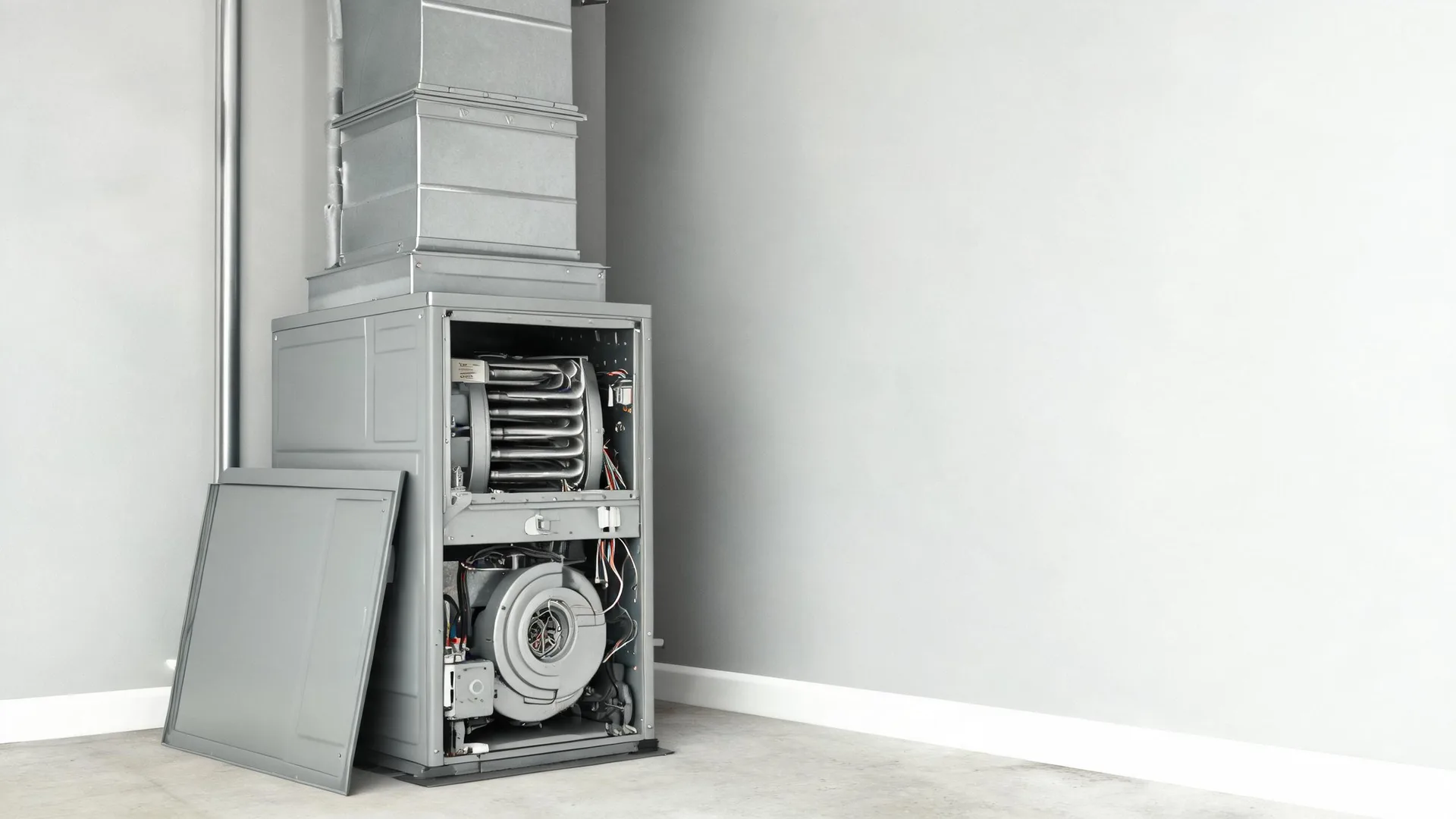
A gray gas furnace with attached ductwork and piping installed in an unfinished concrete basement.

Worth knowing before you call someone out

If the furnace came with the house, a technician can usually still look up the part number and get it in stock within a day or two. That's worth knowing before deciding whether a repair is worth scheduling at all. An old furnace running on obsolete parts is a different conversation than one that just needs a common igniter or sensor replaced.

A small problem can turn into a bigger one

A furnace that's limping along is usually trying to tell you something. A cracked heat exchanger gets worse with heat and cooling cycles, and running it longer only stresses the crack further. A blower motor straining on a bad bearing will keep drawing hard until it seizes. Letting a furnace run while something's clearly wrong rarely buys you time. It usually just trades a repair for a bigger repair.
Some faults protect the furnace from itself

Not every shutdown is the problem. A furnace that trips its limit switch or locks out on a flame sensor fault is doing what it's supposed to do. Forcing it to keep running past one of those safety stops is how a minor sensor issue turns into a cracked exchanger or a burnt-out control board. If it won't stay running, that's worth a call before anyone tries to override it.

Before calling anyone out, check the filter. Pull it and hold it up to a light. If you can't see through it, that's enough to cause a short cycle or a weak flame. Next, look at the thermostat. Dead batteries or a setting bumped to the wrong mode account for more no-heat calls than people expect. Check that the furnace switch, the one that looks like a light switch near the unit, is flipped on, and that the breaker hasn't tripped. If the furnace has a flame but it won't stay lit, or it's making a new noise, stop there. That's not something to keep testing on your own.

A diagnostic visit starts before any panel comes off. A technician will ask what the furnace is doing, when it started, and whether it happens every cycle or just sometimes. Then comes a look at the filter, the flame, and the pressure switch, in that order, because those catch the most common problems fastest. If the furnace locks out, a tech checks the flame sensor and the igniter, since a weak signal there trips the control board before anything else goes wrong. Reading the error code on the control board, if there is one, usually narrows things down before any part gets touched. Only after the easy answers are ruled out does a technician pull the blower or check the heat exchanger, since those take more time to inspect properly.