An unfinished basement containing a metal furnace with ductwork, exposed wooden joists on the ceiling, cardboard boxes, a coiled cable, and a single hanging incandescent bulb.

Furnace Repair in Barnwell, SC

Tell us about the job

Takes about a minute. No obligation.

RepairFurnace or heatingBarnwell County, SC
Step 1 of 2

What ZIP code is the job in?

The tech checks before touching anything

A diagnostic starts with questions. What the furnace was doing before it quit. What sound or smell showed up. Whether the thermostat screen is blank or just unresponsive. Then come the checks. Power at the switch. Flame at the burner. The igniter glowing or not. The flue drawing properly. Each answer rules something out before any part gets replaced.

The cause decides the fix

A cracked igniter gets swapped and the furnace runs again that day. A failing control board or a draft inducer on its way out is a bigger job. Sometimes that part has to be ordered. The diagnostic is what tells you which one you're dealing with, so you know whether to expect a quick repair or a short wait.

5 months
November through March, your furnace is on duty
37°F
the average winter night it heats against
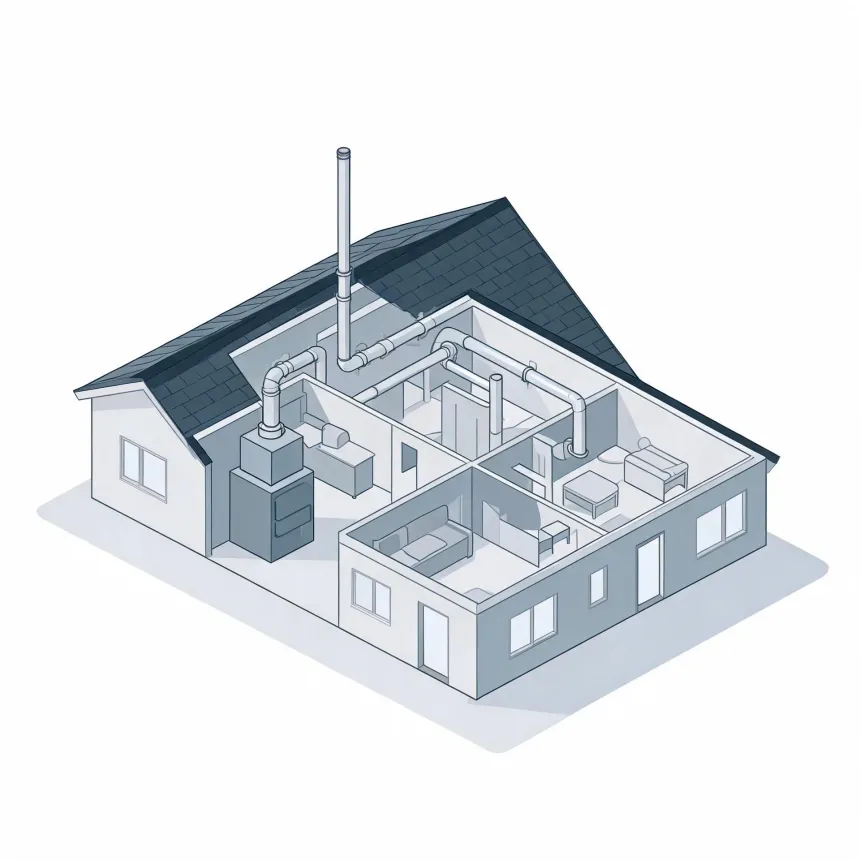
Isometric cutaway illustration of a single-story house showing interior rooms with furniture, a furnace unit connected to ductwork and a tall flue pipe extending through the roof.
Your furnace works hardest from November through March.

NOAA nClimDiv, 1991–2020 normals

A furnace in Barnwell runs on electricity to power its igniter, blower and control board, even on gas furnaces.

When the power drops during a storm, the furnace stops working until a contractor checks whether it came back on correctly.

Barnwell gets five months of heat, and the first cold nights after October find the weak part

Heat runs November through March
Winter nights average 37°F
Climate zone 3A

Half the homes in Barnwell County were built in 1983 or later, so a lot of furnaces here are heating newer construction, not old farmhouses with original ductwork. That's a plain fact, not a warning. Close to a third of homes in the county are mobile homes, and those run furnaces sized and vented for that kind of space, with a different duct setup than a site-built house uses. If yours is in a mobile home, say so when you call. The furnace model and the parts a tech brings out for it are not the same as for a standard house unit, and knowing that ahead of time means the right igniter or board shows up on the first visit instead of the second.

Five months of real cold is not a hard life for a furnace

Heat runs November through March here, and even on the coldest nights the average low only gets to 37°F. A furnace built for that doesn't take the kind of beating one does in a harder climate. If yours is acting up, it's more likely age or a part that failed than a system that's been run into the ground. That usually means a repair is worth doing.

Find a contractor
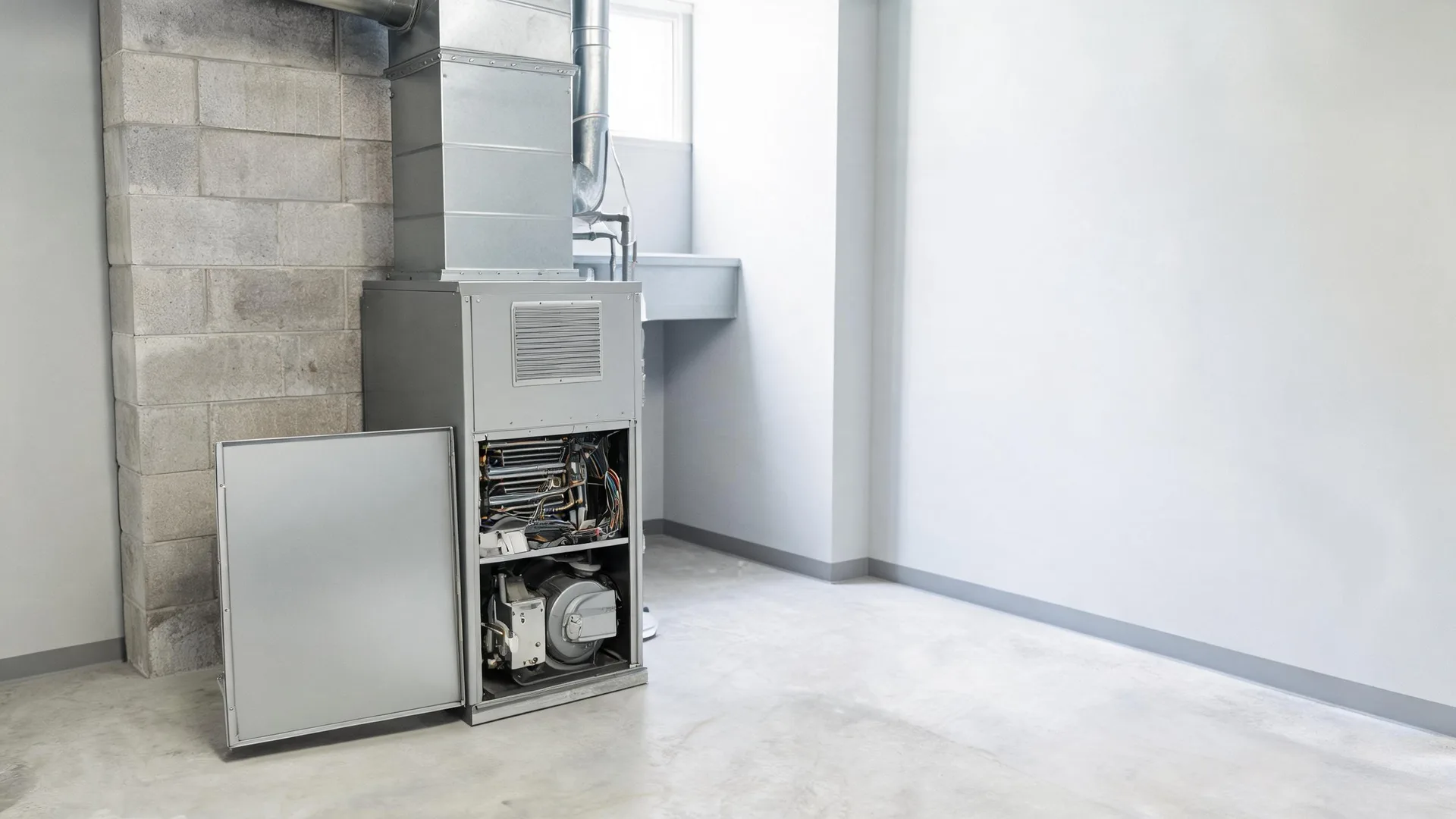
A gas furnace with attached ductwork, gas piping, and condensate lines installed in a concrete-block basement.

One repair now beats guessing at a new furnace

A tech can usually confirm that in one visit. If the furnace is more than a few years old and nothing's been touched, a cracked igniter or a failed sensor is a quick swap and you're back to running it tonight. Worth getting the diagnostic done rather than guessing at a replacement.

What you can check from the thermostat

Make sure it's set to heat, not just fan, and that the set temperature is actually above room temperature. Check the batteries if the screen is dim or blank. If the screen is fully dead, look at the furnace switch and the breaker before assuming the thermostat itself failed.

What to look at near the furnace

Find the furnace switch, it looks like a light switch, usually near the unit, and make sure nobody bumped it off. Check that the air filter isn't packed with dust, since a blocked filter can choke airflow enough to trip a safety switch. Beyond that, leave the panels alone. Flame, gas and wiring checks are not a homeowner job.

Most furnace failures start with one of a handful of parts. The igniter is the one that goes most often. It's a thin strip that glows hot enough to light the gas, and that thin strip is also what makes it fragile. It takes the most cycles of any part in the furnace, so it's usually the first to wear out. The flame sensor is another common one. It coats over with a thin film after enough runs and stops telling the control board that a flame is lit, so the furnace shuts itself off as a safety check. Draft inducers fail from the motor bearings wearing down after years of spinning. Control boards usually go last, and often because something upstream, a bad sensor or a failed limit switch, kept stressing them until they gave out too.

A repair is worth doing when the part that failed is a part on its own, something that does one job and quit. An igniter, a flame sensor, a capacitor. Swap it and the furnace runs the way it did before, because nothing else was asked to compensate while that part was failing. Replacement starts to make sense when the cabinet itself is rusting through, or the heat exchanger has cracked, since that's not a part you swap, it's the core of the furnace. It's also worth asking how many repairs this furnace has needed already. One failed part is normal wear. A second or third in close succession means something is stressing the whole system, and the next part is likely to go too.