


A clean filter lets the furnace breathe
Air moves freely through the ductwork and the unit cycles the way it was built to. The gas line fittings and flue stay doing their job without the blower straining to pull air through clogged media.
One request and finding someone for the tune-up is handled.
Hand it overChange your furnace filter every 90 days, or every 60 if you have pets or anyone in the house has allergies. Most South Carolina homes heat with electricity, running the air handler on a heat pump, and that system pulls air through the filter whether it is heating in January or cooling in July. So the filter is working most of the year here, not just a few winter months, and it loads up faster than you'd expect for a climate known more for its muggy summers than its heating. A clogged filter makes the blower work harder to push air through, which raises what you pay to run it and can ice up a heat pump's coil. Check the filter monthly and hold it up to the light. If you can't see through it, replace it, even if it hasn't been 90 days yet.





That heat pump doesn't shut off once summer ends. In winter it reverses and pulls heat from the outside air instead of the ground or a gas flame, so the same blower and the same filter are working in January that work in July. A furnace filter in a heat pump system sees closer to twelve months of duty than a six or seven month heating run, which is why the 90 day mark matters here more than it would somewhere with a gas furnace sitting idle half the year.

Air has to move across the indoor coil for the system to heat or cool anything. When a filter is packed with dust, the blower pulls harder to get air through it, and less of that air reaches the coil. In winter that coil can frost over from the reduced airflow, and the heat pump loses capacity right when South Carolina nights get cold. Checking the filter against light is a simple test: if you can't see light through it, it's past due.
You've noticed the air coming from the vents feels weaker than it used to, or the system seems to run longer to get the house to temperature. You want to know what the filter actually has to do with that, since it seems like a small thing to cause a bigger problem with the heat pump itself.
A heat pump moves heat by passing air over a coil, and it needs a steady volume of air to do that efficiently. A dirty filter blocks part of that airflow, so the blower has to work harder to pull the same amount of air through. The system ends up running longer to reach the temperature on your thermostat, which uses more power over a month. In winter, when the heat pump is pulling warmth from outside air, restricted airflow also makes it harder for the coil to do its job, so the house takes longer to warm up. Swapping the filter on schedule keeps that airflow where it needs to be.


Skip calling around to set up a furnace tune-up.
It costs nothing to send, and you don't have to hire anyone.
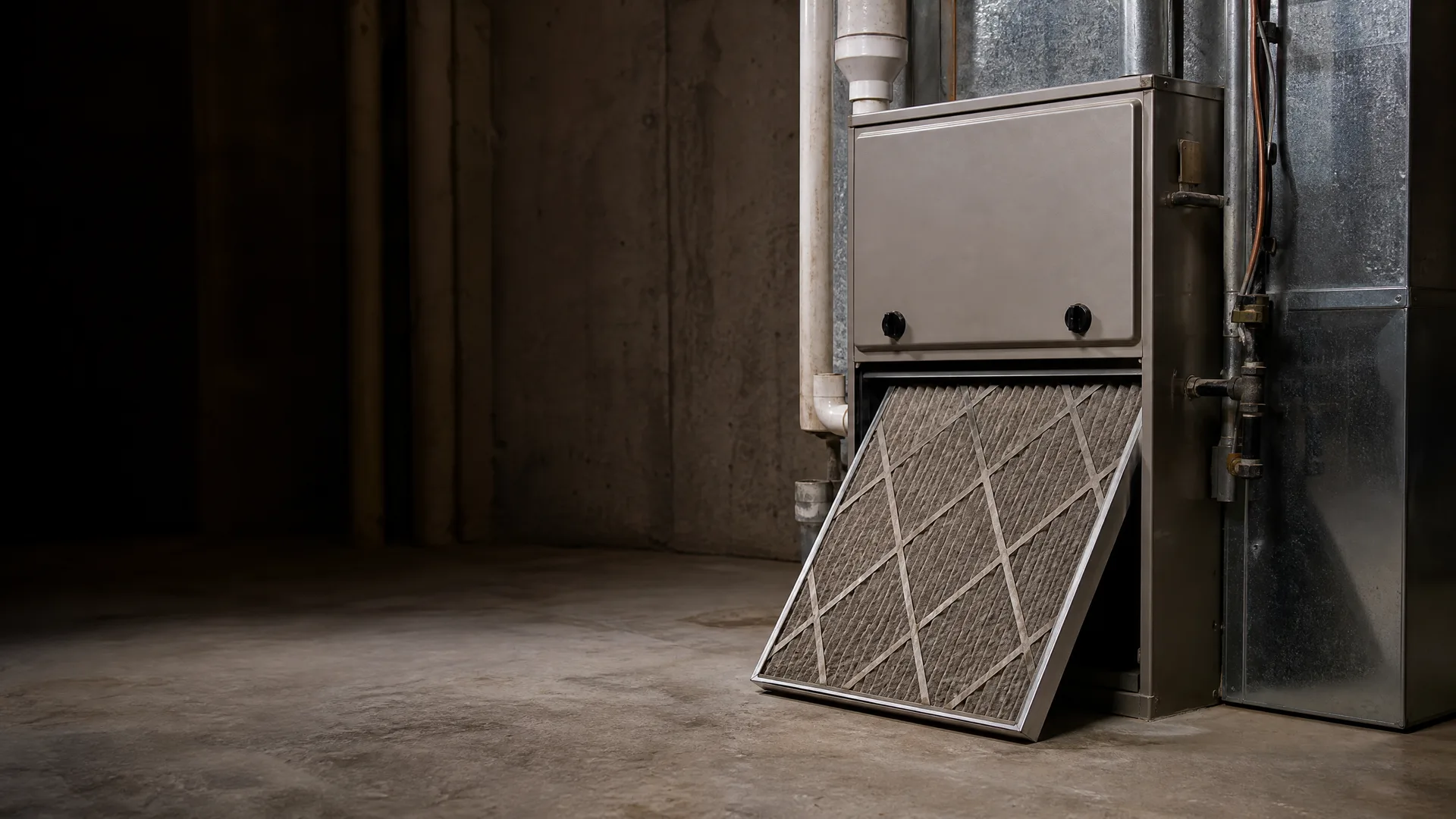
The basement is cooler than the rest of the house, that October afternoon, and the light from the small window has already started to go thin and gray. You've pulled the filter halfway out of the air handler to check it the way you've been meaning to since the weather turned, and it's worse than you expected. The pleats are gray and matted, a layer of dust and what looks like pet hair pressed flat across the whole face of it. You can't see light through it when you hold it up. Upstairs the heat's been running longer than it should to get the house warm, and now you know why. You set it on top of the unit and go looking for the box of replacements you bought back in the spring.
A 36°F night doesn't trip a gas furnace, but it does mean your heat pump is running steady to hold the house, not cycling on and off. That steady pull through the filter is what loads it up faster than a mild night would.
NOAA nClimDiv 1991-2020 county normals weighted by homes

Air moves freely through the ductwork and the unit cycles the way it was built to. The gas line fittings and flue stay doing their job without the blower straining to pull air through clogged media.

Airflow drops and the blower runs longer to move the same amount of heat. Over time that strain reaches the burner and the heat exchanger, parts that cost far more to fix than a filter costs to replace.


Ninety days is the number to work from. Sixty if there's a dog or cat in the house, or if anyone living there deals with allergies. That holds true in every month here, not just the cold ones, because the air handler on a heat pump doesn't take a season off. It's pulling air through that filter in July and in January both, so the clock doesn't reset when summer ends.
A filter left too long doesn't fail all at once. It shows up first as weaker air at the vents, then as a system that runs longer to do the same job. Writing the date on the filter frame when you swap it is a small habit that keeps the count honest, since it's easy to lose track of which month you last checked.
That part you can handle yourself. What's harder to do alone is lining up someone to look at the rest of the system, the parts a filter change doesn't touch. That usually means calling a few contractors, explaining the same thing to each one, and then sitting with quotes trying to work out who's worth hiring. Sending one request here takes that off your plate. You're not doing the searching or the comparing. You're waiting for someone qualified to reach out, and the rest of the legwork isn't yours to do anymore.

One form instead of hunting for a pro who does furnace tune-ups.